We want to create the biggest online listing collection of Weird places around the world!
Please add you short stay weird place rentals now.
Sometimes you are just looking for a holiday that is a little more special. Don't look any further, because we have collected some of the weirdest places from around the world for you, to make your vacation a special one !
10 Weird places found
Europe
Austria
Germany
Sweden
United Kingdom of Great Britain & Northern Ireland
List your weird place on this page?
Add linkWeird places to stay: why a strange night is worth it, and how to get it right
Most hotel rooms blur together after a few trips. A night in a treehouse, an old railway carriage or a room carved into rock does not. Unusual stays turn the place you sleep into the main event of the trip, the part you still talk about years later. This page collects quirky and unusual places to stay from around the world, and this guide explains what to expect from them, what can go wrong and how to choose one that will be memorable for the right reasons.
What makes a stay "weird"?
There is no official definition, and that is part of the fun. A place usually earns the label because of what it is, where it is, or what it used to be. Broadly, most unusual stays fall into a few families:
- Up high: treehouses, cabins on stilts and rooms at the top of converted water towers or lighthouses. Treehouse stays are found in forests and jungles on every continent, from Scandinavia and North America to Costa Rica, Southeast Asia and Australia.
- Underground and in rock: cave houses and cave hotels, such as the rock-cut dwellings of Cappadocia in Turkey, cave homes in southern Spain, and underground homes in the opal mining town of Coober Pedy in Australia, built to escape the desert heat.
- Things that used to move: converted buses, vintage caravans, railway carriages, old boats and even retired aircraft, turned into bedrooms with a story.
- On or under the water: houseboats, floating cabins, overwater bungalows and, at a handful of tropical resorts, rooms below the surface where fish swim past the window.
- Made of ice, glass or canvas: ice hotels rebuilt every winter in the far north, glass igloos for watching the northern lights in Finnish Lapland, geodesic domes, bubble tents and traditional yurts, like the gers still used by nomadic families in Mongolia.
- Small and clever: capsule hotels, a well-known Japanese invention, tiny houses, shepherd's huts and sleeping pods.
- Former something else: churches, grain silos, windmills, prisons, forts, barns and industrial buildings reborn as guest accommodation.
Why people love them
The obvious reason is the story, but there is more to it. An unusual stay often puts you somewhere you could never normally sleep: in the canopy of a forest, on a rocky point surrounded by sea, or under a glass roof in the middle of the Arctic winter. Many are run by owners who built or restored the place themselves, and that passion shows in the details. They also work well for special occasions like anniversaries, proposals and birthdays, and children often remember a night in a treehouse or a train carriage far longer than any theme park.
The practical realities nobody puts in the photos
The same features that make a place charming can make it awkward. Going in with realistic expectations is the difference between an adventure and a disappointment.
Space is often tight. Buses, pods, caravans and boats have limited room for luggage. Pack a soft bag rather than a big hard suitcase, and check the bed size, because narrow or short beds are common in converted vehicles.
Bathrooms may be shared or separate. Some quirky stays have a private bathroom inside. Others have a composting toilet, an outdoor shower or a shared shower block a short walk away. That walk feels very different at night in the rain.
Getting in can be a climb. Treehouses and towers often mean ladders, spiral staircases or rope bridges. Lighthouses can have many steep steps. Caves may have low ceilings and uneven floors. For guests with limited mobility, young children or a fear of heights, this matters a lot. Ask for honest details about access.
Noise and light work differently. Canvas and thin walls let in birdsong at dawn, rain on the roof and wind in the trees. Glass domes and bubble tents can get bright early and hot in the sun. Light sleepers should bring earplugs and an eye mask.
The weather is part of the stay. A treehouse can sway in the wind, a floating cabin can rock, and a remote spot can be cut off by snow or flooding. Ask what happens if conditions turn bad, and whether heating or cooling is adequate for the season.
Facilities can be basic. Off-grid places may have limited power, no Wi-Fi, weak phone signal and a small kitchen or none at all. For many guests that is exactly the point, but it is better to know in advance.
Book early, and be flexible
Unusual stays are almost always one of a kind. There is only one bed in that water tower, and when it is taken, it is taken. The most popular places fill up months ahead for weekends and holidays. Midweek nights and shoulder seasons give you a much better chance. Seasonal stays, such as ice hotels in winter or glass igloos during the northern lights season, have fixed windows, so plan around them. Read the cancellation terms carefully, because small independent owners often have stricter rules than big hotels.
Questions to ask before you book
- Is the bathroom private and inside, or shared or outdoors?
- How do I get in: stairs, ladders, a bridge or a boat?
- Is the stay suitable for children, older guests or people with limited mobility?
- What is the bed size, and how much room is there for luggage?
- Is there heating or air conditioning, and how does it cope with the season I am visiting?
- Is there electricity, phone signal and Wi-Fi?
- Can I cook, or are meals provided or available nearby?
- Where do I park, and how far is it to carry bags?
- Are pets allowed?
- What happens if the weather makes the stay unsafe or impossible?
Be a good guest in an unusual home
Many of these places are fragile, historic or built by hand, and some sit in sensitive natural settings. Follow the house rules, especially about fires, candles, water use and waste. Respect neighbours and wildlife, keep noise down in quiet rural spots, and leave the place as you found it. Owners of one-off stays depend heavily on reviews and word of mouth, so a kind and honest review after your stay really helps them.
How to use the listings
The weird and wonderful places on this page are grouped by continent, country and region, so you can look for something strange close to home or plan a trip around it. Each link goes to the owner's own website, where you can check availability and book directly. Do you own or run an unusual place to stay? Add your link for free with the button above, and help curious travellers find a night they will never forget.
Looking for an awesome place to spend your holiday?
Or want to advertise your houseboat, lighthouse, treehouse or glamping?
Check these links below!
Blog posts
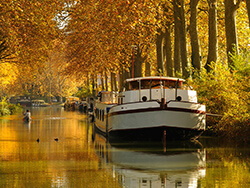
Barge river cruises in France
River cruises in France are the next luxury holiday destination. Cruise your private barge with cook down the French rivers.
Read more..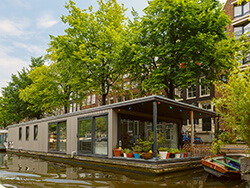
Rent a houseboat in Amsterdam
A houseboat is a great place to stay when visiting Amsterdam. Stay close to the city center but have a lot of private space.
Read more..